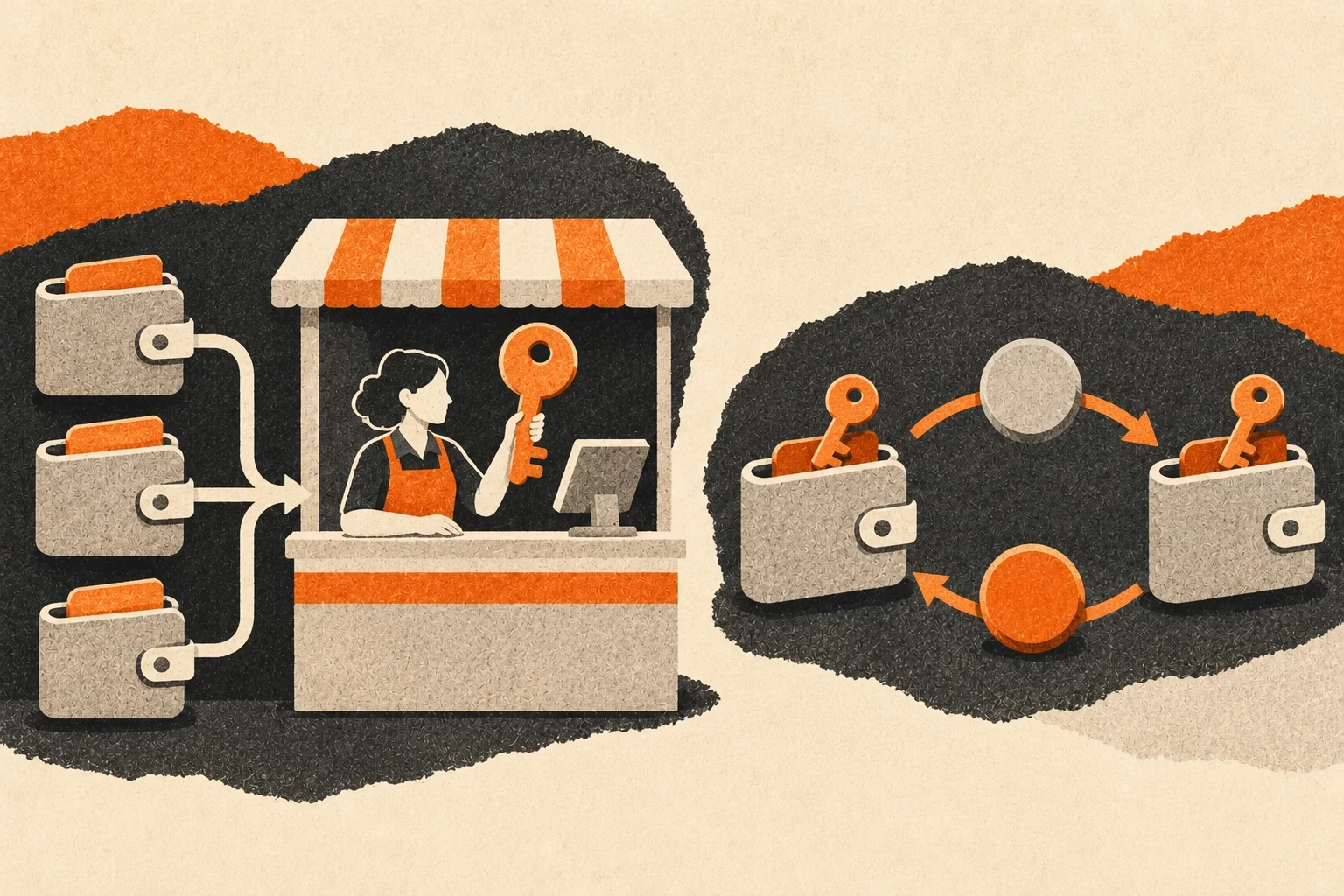
An exchange lets you trade one asset for another. CEX means centralized exchange, run by a company. DEX means decentralized exchange, where software coordinates trades without the central custody arrangement. The first difference to understand is who can move your money.
DEX vs CEX starts with custody
On a typical CEX, you create an account, complete identity checks, and deposit money or cryptocurrency. The company controls the private keys for deposited crypto. Private keys authorize cryptocurrency spending. Your account shows what it owes you. Coinbase’s custody explanation describes this arrangement.
That can make buying with a bank transfer straightforward. There may be password recovery and customer support. But withdrawing depends on the exchange processing your request. An account restriction, withdrawal pause, hack, or business failure can block access. The SEC’s custody bulletin explains these third-party risks.
With a DEX, you generally use a wallet whose keys you control. That removes some reliance on an exchange holding your balance. It also makes wallet security your responsibility. Nobody can reset a lost recovery phrase for you.
How the trade happens
Many CEXs match buyers and sellers through an order book: a list of offers at different prices. Trades may update account balances internally before you withdraw coins to a blockchain address.
Many DEXs instead use smart contracts, programs running on a blockchain. On Uniswap, traders swap against liquidity pools containing assets supplied by other users. You connect a compatible wallet, review the quote, and authorize the transaction.
Keeping your keys does not remove every risk. A faulty contract can lose funds. A malicious spending approval can let someone drain tokens. Connecting a wallet is different from authorizing a contract to spend from it.
That is one DEX design. Other systems match offers between people or use atomic swaps. The label alone does not tell you how funds are held, who settles disputes, or whether a website operator can restrict access.
Read the amount you receive
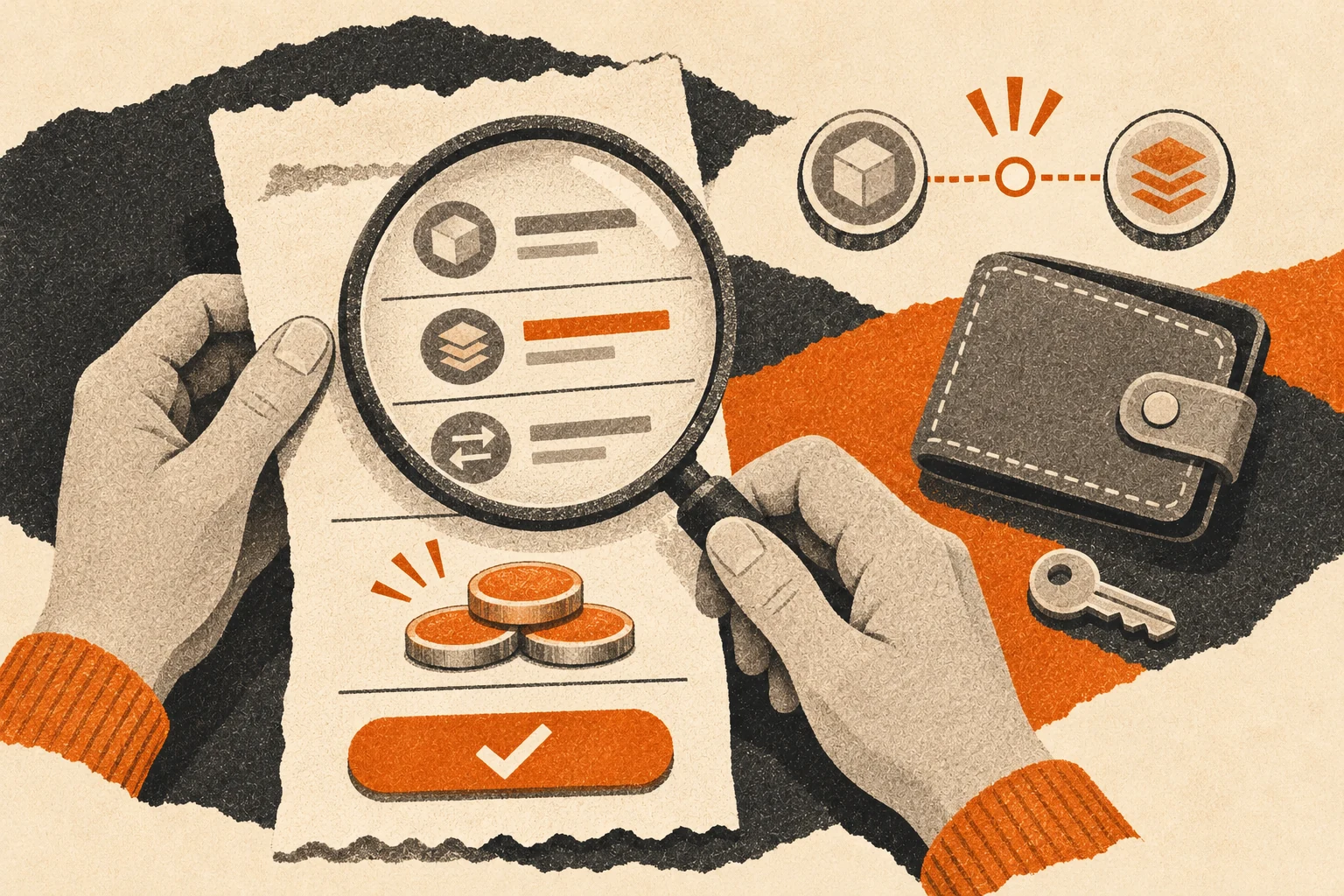
Compare the final amount reaching your wallet. A CEX may charge trading and withdrawal fees. A DEX swap may involve trading fees, interface fees, and a blockchain network fee. For example, a $5 network fee consumes 10% of a $50 trade before other charges.
Two price terms matter. Price impact is the change your own trade causes. Slippage is the difference between the quoted result and execution as conditions change. Uniswap’s swap documentation explains both. Check minimum received amounts rather than raising slippage tolerance just to force a trade through.
Decentralized does not mean private
A CEX usually links activity to your identity. Our KYC guide explains what those checks collect.
A DEX on a public blockchain can expose wallet activity even without an identity document. Ethereum’s privacy overview notes that transactions are public. Bank payments between traders can also reveal names.
Monero trading has different options. Haveno holds trades in a shared Monero wallet, with an arbitrator for disputes. Atomic swaps link exchanges across blockchains. A website advertising instant swaps may still take custody, so check its actual process.
Before your first trade
Confirm the asset, network, receiving address, and total cost. A matching ticker does not prove two tokens are the same. Read withdrawal limits and payment deadlines before sending money.
Start with a small amount whose loss you could tolerate. Keep recovery words offline and never give them to an exchange or support agent. Review wallet permissions before signing. Ethereum’s security guidance covers transaction checks and fake support messages.
Before depositing, check that withdrawals are open for your chosen asset and network. A displayed balance is useful only if you can complete the withdrawal.